
November 26, 2026
About the Author: S&C Music

Imagine sitting at the piano with an unfamiliar piece of sheet music in front of you. You recognise the opening notes, place your fingers on the keys and begin to play.
A few bars later, the rhythm changes, your left hand moves into a different position and you suddenly find yourself struggling to keep up.
Meanwhile, an experienced pianist might perform the very same passage without hesitation.
What makes the difference?
The fascinating relationship between sight-reading and the brain reveals how pianists interpret musical information, anticipate movements and respond to sound almost simultaneously.
For adults learning the piano, understanding these processes can change the way they approach sight-reading and make this seemingly difficult skill far more manageable.

What Actually Happens in the Brain When You Read Music?
A printed musical score contains an extraordinary amount of information.
The position of a note indicates its pitch, its appearance determines its duration, and additional markings communicate articulation, dynamics and musical expression.
Unlike reading a book, where you can pause to consider a sentence, reading music whilst playing requires you to process this information within a continuous rhythmic framework.
Several areas of the brain contribute to this process.
The visual cortex processes the notation, regions involved in spatial awareness help establish the relationship between the score and the keyboard, and motor areas organise the movements required to produce the notes.
Your auditory system also plays an important role, allowing you to monitor the sounds you produce.
According to a brain imaging study on musical sight-reading, reading music involves a network of interconnected brain regions rather than a single centre responsible for musical notation.
At the piano, this coordination becomes particularly demanding because both hands often perform different musical tasks at the same time.
Why Experienced Pianists Read Ahead
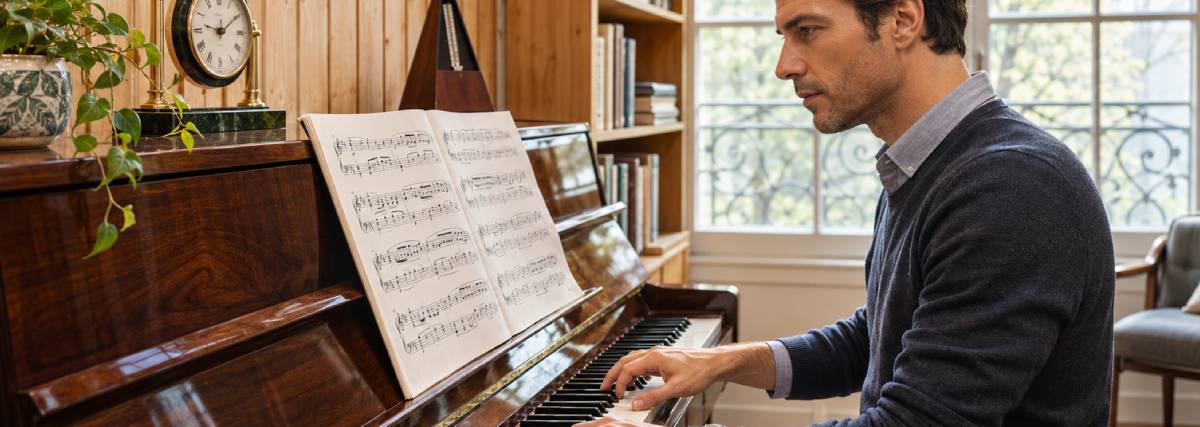
If you observe a confident sight-reader closely, you may notice that their eyes are not necessarily following the notes their fingers are currently playing.
They are often looking further ahead.
In music research, this is known as the eye-hand span, referring to the distance between the point being read and the music currently being performed.
Consider a passage in which the right hand plays a simple melody before moving to a higher register.
Reading ahead allows the pianist to anticipate the movement and prepare the hand before the new notes arrive.
Without this preparation, there is a greater likelihood of hesitation.
According to research on the eye-hand span in pianists, the distance between reading and playing varies depending on the complexity and tempo of the music.
Even experienced pianists may read less far ahead when encountering particularly demanding passages.
For adult learners, developing this ability takes patience.
Begin with uncomplicated melodies and gradually become accustomed to looking towards the next beat or group of notes whilst maintaining the current rhythm.

How Working Memory Supports Sight-Reading
Working memory is the brain’s ability to hold information temporarily whilst using it to complete a task.
When sight-reading at the piano, you might be remembering an upcoming chord, maintaining a rhythmic pattern in your left hand and preparing the fingering for a new melodic phrase.
All of this happens within a very short period.
A 2023 study published in PLOS ONE found that auditory working memory was associated with the ability to read ahead, which in turn was linked to stronger piano sight-reading performance.
This offers an interesting explanation for a difficulty commonly experienced by beginners.
A student may be perfectly capable of recognising every note in a passage when given sufficient time, yet struggle to play those same notes continuously.
The difficulty is not necessarily a lack of musical knowledge.
It may simply be that too many decisions are being made at once.
Working with easier pieces reduces this demand and allows the different aspects of sight-reading to develop together.
Why the Brain Prefers Musical Patterns
Think about how you read this article.
You recognise familiar words without consciously identifying every letter.
Musical reading develops in much the same way.
A beginner might look at four ascending notes and identify them individually.
A more experienced pianist may immediately recognise them as part of a scale.
Similarly, a group of three notes can be recognised as a familiar chord rather than three separate instructions.
This recognition of patterns is particularly valuable in classical piano music, where scales, arpeggios, chord progressions and recurring accompaniment figures appear frequently.
Take the Alberti bass, for instance, a broken-chord accompaniment commonly found in the works of Mozart and Haydn.
Once a pianist becomes familiar with its characteristic pattern, reading similar passages requires considerably less conscious effort.
This is one of the reasons why studying music theory alongside practical piano playing is so beneficial.
Recognising the structure of a piece allows you to make sense of the notation more efficiently.
The score gradually becomes a collection of meaningful musical ideas rather than a succession of unrelated notes.

The Connection Between Reading Music and Hearing Music
An interesting aspect of musical literacy is the ability to imagine sound without hearing it physically.
When experienced musicians look at a score, they may be able to form an internal impression of its melody, rhythm or harmony before playing a single note.
This ability is often referred to as audiation.
Although it develops gradually, it can become a valuable part of sight-reading.
Having an idea of how a passage should sound helps you recognise whether your playing corresponds with the written music.
Imagine reading a melody that moves upwards in small steps before descending suddenly.
If you can anticipate the general direction of the melody, an incorrectly played note may become easier to detect.
This explains why developing your musical ear is just as relevant as improving your ability to recognise notation.
Try singing a simple written melody before playing it on the piano.
Even if your singing is imperfect, the exercise encourages you to establish a closer relationship between written music and sound.
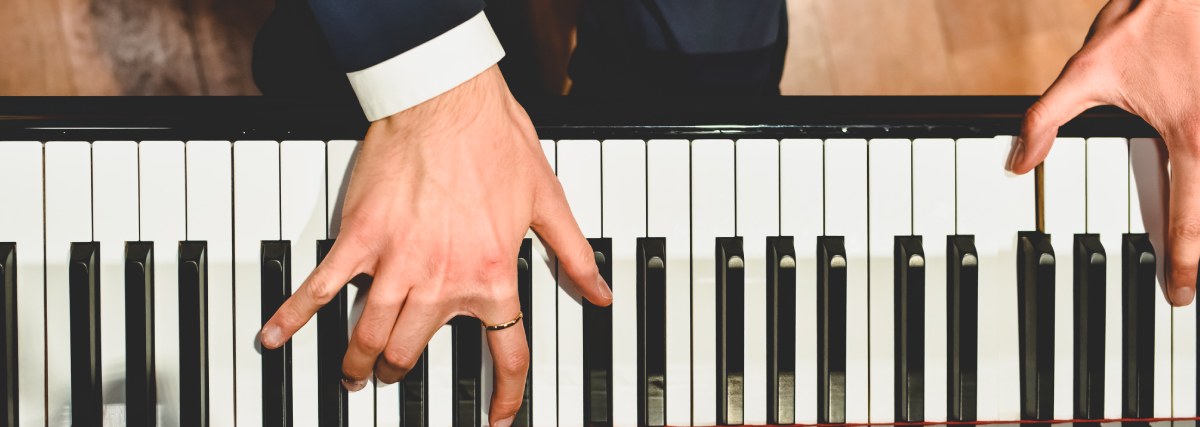
Why Coordinating Both Hands Can Be Challenging
Many adult piano students find that they can read a melody comfortably with the right hand and an accompaniment with the left, but experience considerable difficulty when attempting to combine them.
This is entirely understandable.
Piano sight-reading requires the brain to organise two sets of movements whilst following a shared musical pulse.
The challenge becomes particularly apparent when the hands play contrasting rhythms or move in different directions.
For example, your left hand may sustain a series of longer notes whilst your right hand plays a flowing quaver melody.
Maintaining the independence of each musical line requires coordination, concentration and an understanding of their rhythmic relationship.
Fortunately, familiar technical movements gradually require less conscious attention.
Regular practice of scales, chords and common accompaniment patterns can therefore make sight-reading easier by improving your familiarity with the keyboard.
The more comfortable your hands become with these movements, the more attention you can devote to reading the score.

Can Learning to Read Music Change the Adult Brain?
It is a common misconception that musical skills must be developed during childhood.
The adult brain retains the capacity to adapt in response to new experiences and learning.
This ability is known as neuroplasticity.
Research into brain changes associated with musical learning has identified changes in brain activity as individuals develop music-reading and keyboard skills.
For someone beginning piano lessons later in life, this is particularly encouraging.
However, developing sight-reading fluency takes time.
You should not expect a few weeks of practice to transform your reading ability entirely.
Adults also bring certain advantages to musical learning, including patience, analytical thinking and the ability to approach practice with a clear purpose.
Regular, appropriately challenging practice can help establish stronger connections between musical symbols, keyboard movements and the sounds they produce.
Progress may initially seem gradual, but passages that once required considerable concentration can eventually become much easier to read.
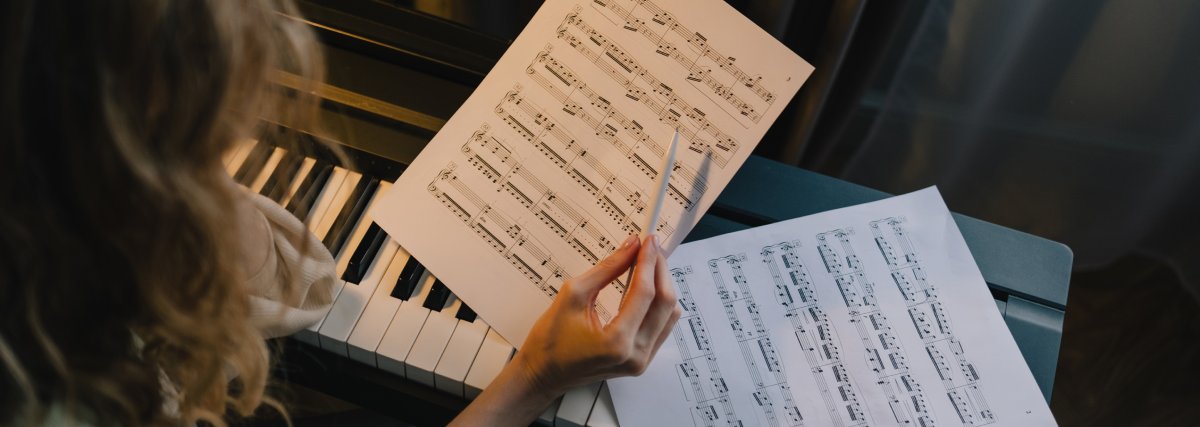
How to Improve Your Piano Sight-Reading
One of the most common mistakes when practising sight-reading is choosing music that is too difficult.
A piece suitable for several weeks of careful study is not necessarily suitable for sight-reading practice.
Instead, select unfamiliar music that is comfortably below your current performance level.
Before beginning, examine the key signature, time signature, rhythmic figures and any noticeable changes in hand position.
Give yourself enough time to understand the general character of the piece, but avoid practising individual passages beforehand.
Once you begin, choose a steady tempo and aim to maintain the musical flow.
If you play an incorrect note, continue rather than returning to correct it.
This distinction is important. When studying repertoire, correcting mistakes is essential.
When sight-reading, learning to recover from them is equally valuable.
Even five to ten minutes of focused sight-reading practice each day can become a productive part of your piano routine.
You might also explore simple duets with your piano teacher.
Having another musician maintain the rhythm encourages you to continue playing and develops your ability to listen whilst reading.
Above all, introduce unfamiliar music regularly.
Repeating a piece improves your knowledge of that particular composition, whereas sight-reading requires you to keep encountering something new.

Develop Greater Musical Independence at S&C Piano
There is a particular pleasure in opening a book of piano music and discovering that you can play something simply because it appeals to you.
You no longer need to spend days deciphering every note before discovering the character of a piece.
You can explore different composers, experiment with unfamiliar styles and enjoy a broader selection of music.
This is one of the most rewarding aspects of developing sight-reading skills as an adult.
At S&C Piano in DIFC, Dubai, our experienced piano instructors help adult learners develop their reading fluency, musical understanding and keyboard technique through personalised tuition.
Whether you are learning to read sheet music for the first time or returning to the piano after several years, our one-to-one piano lessons in Dubai are designed to help you progress at a pace that suits your individual abilities and musical interests.

RELATED POSTS